It feels like everyone is talking about Artificial Intelligence (AI) these days. You hear about it on the news, see it in movies, and maybe even use it every day without realizing it. It’s easy to feel a bit overwhelmed by it all, wondering if it’s just a fad or a real chance to build something new.
You might be thinking, “Can I really start a business with AI?” The good news is, yes, you absolutely can. This guide is here to break down how AI can open up exciting new paths for your business dreams.
AI presents vast business opportunities by automating tasks, enhancing decision-making, and creating new products or services. Understanding AI’s capabilities and your market’s needs is key to finding a profitable niche. Explore practical steps to leverage AI for entrepreneurial success.
What is Artificial Intelligence and Why It Matters for Business
AI, in simple terms, is about making machines smart. It’s teaching computers to learn, solve problems, and make decisions like humans do. Think of it as giving a computer a brain.
This doesn’t mean robots taking over. It means software that can sort through tons of information faster than any person ever could. It can spot patterns you might miss.
It can predict what might happen next. This power is changing how businesses work. It helps them be more efficient.
It helps them serve customers better. It even helps them create entirely new things.
For small businesses and entrepreneurs, AI is a game-changer. It’s not just for big tech companies anymore. AI tools are becoming more accessible.
They are also becoming easier to use. This means even a one-person shop can use AI to compete. You can automate boring tasks.
You can get helpful insights from your data. You can offer personalized experiences to your customers. These are things that used to be very hard or very expensive to do.
The impact of AI is huge. It’s helping doctors diagnose diseases. It’s helping farmers grow more food.
It’s helping artists create new kinds of art. For your business, it means new ways to reach customers. It means new ways to manage your operations.
It means new ways to solve old problems. Understanding these possibilities is the first step to finding your place in the AI future.
My First Encounter with AI’s Business Potential
I remember when I first started dipping my toes into AI for my own work. It wasn’t glamorous. I was trying to manage a growing email list for a small online store I was helping out.
The list was getting huge. Sorting and tagging people based on what they bought or showed interest in felt like a never-ending task. I’d spend hours manually moving names around.
My weekends were disappearing. It was honestly pretty frustrating.
One late evening, staring at a massive spreadsheet, I felt a wave of exhaustion. “There has to be a better way,” I muttered to myself. That’s when I stumbled upon a simple AI tool.
It was designed to automatically categorize customer feedback and purchase history. I was skeptical. Could this little program really understand what my customers liked?
I fed it some data, held my breath, and clicked “run.” Within minutes, it had sorted hundreds of customers into neat, relevant groups. I was stunned. It wasn’t perfect, but it was so much better.
That moment showed me firsthand how AI could take a tedious, time-consuming job and make it easy. It freed up my time to actually talk to customers and improve the products. It was a small win, but it sparked a big idea about the future of work.
This experience wasn’t about building a complex AI model from scratch. It was about using an existing AI tool to solve a real, everyday business problem. It made me realize that AI isn’t just for giant corporations.
It’s for anyone who wants to work smarter. It’s for anyone looking to grow their business without burning out. That’s the kind of opportunity AI offers.
Understanding the Landscape: Where AI Shines for Businesses
AI is a broad field. But when we talk about business opportunities, certain areas stand out. These are places where AI is already making a big difference.
They are also areas where new ideas are constantly popping up. Knowing these areas can help you spot where you might fit in.
Think about things like customer service. AI-powered chatbots can answer common questions 24/7. They free up human agents for more complex issues.
This makes customers happier and saves businesses money. AI can also analyze customer feedback from reviews or social media. It can tell you what people love and what they don’t.
This is super valuable information.
Another big area is marketing. AI can help you understand your customers better. It can predict who is most likely to buy something.
It can even help you create personalized ads. This means your marketing budget works harder. You reach the right people at the right time.
This leads to more sales.
Operations and efficiency are also key. AI can help businesses manage their inventory. It can optimize delivery routes.
It can even help with hiring by screening resumes. Imagine cutting down on waste or saving fuel costs. These are real business gains powered by AI.
Then there’s content creation. AI tools can help write articles, create social media posts, or even design graphics. While not always perfect, they are great starting points.
They can help overcome writer’s block or speed up content production. This is a huge help for small teams.
Finally, there’s data analysis. Businesses collect tons of data. AI can make sense of it.
It can find trends and insights that humans might miss. This helps make smarter decisions about products, services, and strategy.
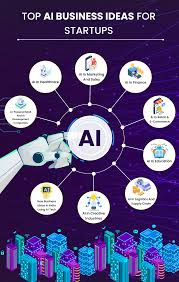
AI Business Opportunity Spotlight
Customer Support: AI chatbots that offer instant, 24/7 help.
Marketing Automation: Tools that personalize ads and predict customer behavior.
Operations Efficiency: AI for inventory management and route planning.
Content Generation: AI assistants for writing, design, and social media.
Data Insights: AI that finds patterns and trends in business data.
These are just some of the main ways AI is used. Each of these areas holds potential for new businesses or for improving existing ones. The key is to look at a problem you know well and see if AI can offer a smarter solution.
Finding Your Niche: What Problem Can You Solve?
The biggest mistake people make when thinking about AI businesses is focusing on the technology first. They think, “I want to build an AI.” But successful businesses solve problems. The technology is just the tool.
So, the real question is: What problem are you passionate about solving? What frustrates you or others in your daily life or work?
Think about your own experiences. What tasks do you find yourself doing repeatedly that feel like a waste of time? What information is hard to find or understand?
What processes in your industry are slow or inefficient? These are all potential starting points for an AI-powered business idea.
For example, let’s say you work in a small retail shop. You notice that keeping track of popular items and reordering them takes hours. You also know that sometimes you run out of popular things, and customers get upset.
You could explore AI tools that predict sales based on past data and current trends. This could help you order just enough of what you need, when you need it. Your business idea would be an “AI-powered inventory management system for small retailers.”
Or maybe you’re a freelance writer. You spend a lot of time researching topics and then organizing your notes. You could look into AI tools that help summarize long articles or extract key information from PDFs.
Your business could be a “AI research assistant for content creators” that streamlines the information gathering process.
It’s also about looking at unmet needs. Are there groups of people whose specific problems aren’t being addressed by current solutions? Perhaps elderly individuals who struggle with complex online forms.
An AI could help simplify these forms or guide them through the process. That’s a business opportunity focused on accessibility.
Don’t try to solve every problem at once. Pick one specific pain point. Focus on understanding it deeply.
Then, consider how AI can offer a truly better solution than what’s available now. This focused approach is much more likely to lead to a successful business.
Your Niche Finder: Ask Yourself
What daily tasks annoy me? Can AI automate or simplify them?
What information is hard to access? Can AI make it easier to find or understand?
What processes are slow and costly? Can AI speed them up or reduce expenses?
Who needs help that isn’t getting it? Can AI provide a tailored solution?
The most exciting AI business ideas often come from real-world struggles. They are born from a desire to make things better for yourself and for others. Don’t be afraid to start small.
Focus on a problem that resonates with you.
Exploring Different AI Business Models
Once you have an idea for a problem to solve, you need to think about how your business will make money. AI businesses can take many forms. The model you choose will depend on your product or service and your target customers.
Here are some common ways AI businesses generate revenue:
Software as a Service (SaaS): This is very popular. You build an AI tool or platform. Then, customers pay a monthly or yearly subscription fee to use it.
Think of email marketing software or project management tools. Many now have AI features. If your AI solution helps businesses save time or make money, SaaS is a strong model.
For example, a company offering AI-powered sales forecasting for small businesses would likely use SaaS.
AI-Powered Consulting: You can use your expertise in AI to help other businesses. This could involve advising them on how to implement AI, building custom AI solutions for them, or analyzing their data. This model requires deep knowledge and strong communication skills.
Clients hire you for your expertise to solve their specific AI-related challenges.
AI-Enhanced Products/Services: You might have a non-AI product or service, but you add AI to make it better. For example, a smart home device company could use AI to learn user habits and optimize energy use. A tutoring service could use AI to personalize learning plans for students.
The AI enhances the core offering and makes it more valuable.
Data Monetization (with privacy in mind): If your business generates valuable data, you might be able to monetize it. This must be done very carefully and ethically, always respecting user privacy. Often, this involves anonymizing and aggregating data to provide market insights.
For example, a popular app that tracks fitness could, with user consent, provide anonymized data on exercise trends to sports brands.
AI Tools and Platforms: You can create AI tools that other developers or businesses use to build their own AI applications. This is more technical. It involves creating libraries, APIs, or foundational AI models.
Companies like OpenAI and Google Cloud AI offer services like this, but there’s room for niche tools.
AI-Assisted Content Creation: Businesses that offer services like writing, graphic design, or video editing can use AI to speed up their work. They can charge clients for the final product, but their costs are lower due to AI assistance. They might offer different tiers of service, with faster turnaround times for higher prices, enabled by AI.
Choosing Your AI Business Model
- SaaS: Recurring revenue for software access.
- Consulting: Expertise-based services for custom solutions.
- Enhanced Products: Adding AI to improve existing offerings.
- Data Insights: Selling aggregated, anonymized market trends.
- Platform Tools: Building AI components for others.
- Content Services: Using AI to boost delivery speed and capacity.
When you’re starting out, a SaaS model or offering AI-powered consulting can be good choices. They allow you to focus on delivering value directly. They also give you clear revenue streams.
Think about who your customer is and what they value most. This will guide you to the right business model.
Getting Started: Practical Steps for Your AI Venture
So, you have a problem to solve and an idea for how AI can help. You’ve thought about how you might make money. Now, what are the actual steps to get your AI business off the ground?
It’s less about advanced coding and more about smart planning and execution.
1. Validate Your Idea: Before you build anything, talk to potential customers. Do they actually have this problem?
Would they pay for your solution? Show them mockups or describe your idea. Get honest feedback.
This is crucial. Many great ideas fail because no one needed them.
2. Start Simple with AI Tools: You don’t need to be an AI expert from day one. There are many user-friendly AI tools available.
Look for no-code or low-code platforms. Services like OpenAI’s API, Google AI Platform, or specialized tools for marketing, writing, or design can be your starting point. They let you integrate AI features without deep technical knowledge.
3. Build a Minimum Viable Product (MVP): What’s the absolute core of your AI solution? Build just that.
Get it into the hands of early users. Collect their feedback. This approach saves time and resources.
It ensures you’re building something people actually want. Your MVP might not be perfect, but it should deliver the main value.
4. Focus on User Experience (UX): Even with powerful AI, if your product is hard to use, people won’t adopt it. Make sure the interface is clean and intuitive.
The AI features should feel natural and helpful, not complicated. A smooth user experience is key for customer satisfaction and retention.
5. Marketing and Outreach: How will people find out about your AI business? Use digital marketing strategies.
Content marketing can be great for AI businesses. Explain how your AI solves problems. Use social media to share insights.
Partner with others in your niche. Targeted advertising can also be effective.
6. Legal and Ethical Considerations: This is very important for AI. Understand data privacy laws (like GDPR or CCPA).
Be transparent about how you use AI and data. Ensure your AI systems are fair and unbiased. Consult with legal experts if you’re unsure.
Building trust is paramount.
7. Iterate and Improve: Once you launch, the work isn’t done. Continuously gather feedback.
Monitor how users are interacting with your AI. Use this information to make improvements. AI models can often be retrained or updated to perform better over time.
Stay adaptable.
Your AI Business Launchpad
Step 1: Talk to people. Is your idea wanted?
Step 2: Use easy AI tools. Don’t reinvent the wheel.
Step 3: Build the core first (MVP). Get it out fast.
Step 4: Make it easy to use. Good design matters.
Step 5: Tell people about it. Marketing is key.
Step 6: Be safe and honest. Laws and ethics count.
Step 7: Keep making it better. Listen to users.
Starting an AI business might seem daunting, but by breaking it down into these manageable steps, it becomes much more achievable. Focus on delivering real value and building trust. The AI aspect is a powerful enabler, but it’s the problem-solving that truly drives business success.
Real-World AI Business Success Stories (and What We Can Learn)
Looking at how others have succeeded with AI can be incredibly inspiring. These aren’t just tech giants. Many smaller companies and entrepreneurs have found their footing.
Let’s explore a few examples and pull out the key lessons.
Consider a company like Grammarly. They started by offering a simple spell-checker. But they evolved by integrating AI to provide advanced grammar, style, and tone suggestions.
Their business model is SaaS. Users pay for premium features that go far beyond basic corrections. What’s the lesson here?
Start with a clear need and then progressively add AI to enhance the core value. They didn’t start by saying “Let’s build an AI grammar checker.” They started by wanting to help people write better.
Another great example is Ocado, a UK-based online grocer. They use AI and robotics extensively in their warehouses to manage inventory and pick orders efficiently. This allows them to offer a wider selection and faster delivery than many traditional supermarkets.
Their AI isn’t visible to the end consumer, but it’s critical to their operations and competitive edge. The lesson? AI can be a powerful back-end tool that revolutionizes operations and creates a competitive advantage, even if customers don’t directly interact with the AI itself.
Think about smaller, more niche businesses too. I’ve seen freelancers use AI tools to create personalized workout plans for clients. They combine their fitness knowledge with AI’s ability to process vast amounts of exercise science data.
The AI helps them scale their services. They can handle more clients because the AI assists with program design. This is a great example of AI empowering an individual expert to offer more valuable and scalable services. It’s not about replacing the expert, but augmenting their abilities.
Then there are companies using AI for personalized learning. Instead of a one-size-fits-all approach, AI can adapt educational content to a student’s pace and learning style. This is crucial for fields where understanding is paramount.
These companies often use a subscription model. The AI-driven personalization is their key differentiator. The takeaway is that AI can unlock deep personalization, making services far more effective and desirable.
What connects all these stories? A focus on solving a real problem. A willingness to embrace technology not just for its own sake, but for the value it delivers.
And a clear understanding of their customer and market. They often start with accessible AI tools and build from there. They don’t shy away from the complexities but tackle them step by step.
Key Takeaways from AI Success Stories
Focus on the Problem: Solve a real customer pain point first.
Enhance, Don’t Replace: Use AI to make existing services better.
Behind the Scenes Power: AI can drive efficiency without direct customer interaction.
Scale Expertise: AI helps experts reach more people.
Personalization is Key: Tailor solutions to individual needs.
These examples show that the opportunities are vast and varied. Whether you’re looking to build a tool, improve a service, or offer expert advice, AI can be your partner. The most successful ventures see AI as a tool to serve humanity better and more efficiently.
What This Means For Your Business Goals
Understanding the landscape of AI business opportunities is exciting. It means you have more options than ever before. You can think about starting a new venture or enhancing your current one.
The key is to see AI not as a threat, but as a powerful ally.
If you’re looking to start a new business, the possibilities are wide open. You can create software that automates tasks for small businesses. You could build a service that uses AI to analyze data for niche industries.
You could even develop educational content about AI itself. The barrier to entry for many AI-powered businesses is lower than you might think.
For those already running a business, AI offers incredible potential for growth and efficiency. Think about your current operations. Where are the bottlenecks?
Where do you spend too much time on repetitive tasks? Could AI help streamline these areas? Could it help you understand your customers better?
Could it improve your marketing or sales efforts?
It’s important to set realistic expectations. Building a successful AI business takes time, effort, and continuous learning. It’s not a magic wand.
But it is a powerful set of tools that can give you a significant edge. The more you learn about AI and its applications, the more opportunities you’ll discover.
Start by identifying one area where AI could make a difference. It might be something small. It might be a feature for your existing website or an improvement to your customer service.
Then, explore the AI tools available. You might be surprised by how much you can achieve with readily accessible technology.
Your AI Opportunity Check-in
New Business Idea: Is there a problem AI can solve uniquely?
Existing Business Upgrade: Can AI improve efficiency or customer experience?
Skill Development: What AI skills can you learn to add value?
Tool Exploration: What AI tools are available for your industry?
The most significant implication is that AI democratizes innovation. It puts powerful capabilities within reach of more people. This means your ideas, your passion, and your hard work can now be amplified by technology in ways that were impossible just a few years ago.
Embrace this shift.
Quick Tips for Leveraging AI in Your Business
Ready to put some of this into practice? Here are a few simple tips to get you started with AI in your business, whether you’re just exploring or ready to launch:
- Start with a Free Trial: Many AI tools offer free trials. Use these to experiment. See what works for your specific needs. Don’t commit until you’re sure.
- Focus on One Task: Don’t try to implement AI everywhere at once. Pick one small, repetitive task. Find an AI tool to help with that. Master it before moving on.
- Learn Prompt Engineering Basics: If you’re using AI for writing or content creation, learning how to write good prompts is essential. Clear instructions lead to better results.
- Watch for AI Integrations: Many popular business tools (like CRMs, email platforms, and design software) are adding AI features. Keep an eye on the tools you already use.
- Educate Yourself Continuously: The AI field moves fast. Follow reputable AI news sources. Attend webinars. Learn about new tools and techniques as they emerge.
- Prioritize Data Quality: AI thrives on data. If your data is messy or incomplete, your AI won’t perform well. Spend time cleaning and organizing your data.
- Always Review AI Output: AI is a tool, not a replacement for human judgment. Always review and edit AI-generated content or decisions. Ensure accuracy and suitability.
These simple steps can help you integrate AI effectively without feeling overwhelmed. It’s about practical application and smart learning.
Frequently Asked Questions About AI Business Opportunities
Is it too late to start an AI business?
No, it’s definitely not too late! AI is still a relatively new field for many businesses. There are countless problems waiting for AI-powered solutions.
The technology is constantly evolving, creating new opportunities every day. The key is to find a specific problem and apply AI to solve it effectively.
Do I need to be a programmer to start an AI business?
Not necessarily. While programming skills are helpful for building complex AI systems, many businesses can be built using no-code or low-code AI tools and platforms. You can leverage APIs and specialized software that abstract away much of the coding complexity.
Your focus can be on business strategy and understanding customer needs.
How much money do I need to start an AI business?
The startup costs can vary greatly. Some AI businesses can be started with very little money, especially if you leverage existing AI tools and focus on services. Others, like building a custom AI platform, can require significant investment.
Validating your idea and starting with a Minimum Viable Product (MVP) can help minimize initial costs.
What are the biggest challenges in starting an AI business?
Some common challenges include understanding the right AI tools for your problem, ensuring data privacy and ethical AI use, dealing with rapid technological changes, and educating your target market about the benefits of your AI solution. Building trust with customers is also a major factor.
Can AI help me make my existing business more profitable?
Absolutely. AI can help businesses become more profitable by automating tasks, reducing operational costs, improving marketing targeting, enhancing customer service, and providing deeper insights into customer behavior and market trends. Even small integrations can lead to significant efficiency gains and revenue growth.
What kind of AI skills are most valuable for business owners?
For business owners, understanding AI concepts and applications is more critical than deep technical coding. Skills in “prompt engineering” (how to effectively communicate with AI), data analysis, strategic AI implementation, and understanding the ethical implications of AI are highly valuable. Knowing how to select and use AI tools is also key.
The Future is Now: Embrace Your AI Business Journey
It’s clear that Artificial Intelligence is not just a futuristic concept; it’s a powerful tool available today. You’ve seen how it can transform businesses, create new markets, and solve problems we once thought were impossible. The journey to starting your own AI business might seem long, but it’s paved with exciting possibilities.
Remember to focus on real problems, start simple with accessible tools, and always put your customers first. Your unique perspective and passion are your greatest assets. Combine that with the power of AI, and you’re well on your way to building something impactful and successful.
The AI revolution is happening now, and you have a chance to be a part of it.