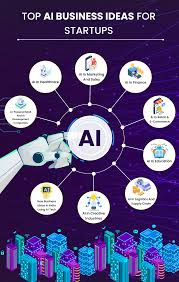
AI content creation businesses leverage artificial intelligence tools to generate various forms of written material efficiently. This includes blog posts, articles, marketing copy, and more. The focus is on combining AI’s speed and scale with human oversight for quality and strategic relevance, offering a scalable content solution for businesses.
What is an AI Content Creation Business?
An AI content creation business is one that uses artificial intelligence (AI) software. This software helps write content for clients. Think of blog posts, website text, social media updates, and even ad copy.
The business owner or team doesn’t just press a button and get perfect content.
Instead, they use AI as a powerful tool. It speeds up the writing process. It helps brainstorm ideas.
It can even draft entire pieces. But the humans are still in charge. They check for accuracy.
They make sure the tone is right. They add that special human touch that AI alone can’t quite capture. This blend makes the content better and faster to produce.
This kind of business is growing fast. Many companies need lots of content. They need it often.
They also want it to be good. An AI content business can meet these needs. It offers a way to get more content done.
It does this without needing a huge team of writers. Or it helps a smaller team do much more work.
My AI Content Journey: A Real-World Story
I remember the first time I really explored AI writing tools for my own work. It was a few years ago. I was running a small marketing agency.
We had a client who needed a ton of blog posts. They wanted them for a new product launch. We had a tight deadline.
The budget wasn’t huge either.
I felt that familiar knot of stress in my stomach. Could we write them all well, on time, and affordably? I started playing with an AI writer.
It felt strange at first. I’d type in a prompt, and text would just appear. It was okay, but a bit bland.
It lacked personality. Some facts were even a little off.
My initial thought was, “This isn’t going to work.” But then I remembered that AI is a tool, not a replacement. I started treating it like a super-fast junior writer. I gave it better prompts.
I spent time editing its output. I added my own voice. I fact-checked everything.
I made sure it flowed nicely.
The result? We finished the posts ahead of schedule. The client was thrilled with the quality.
They were even happier with the speed. That experience showed me the real power of combining AI with human skill. It was the spark that made me think, “I could build a business around this.” It wasn’t just about the tech; it was about solving a real client problem more effectively.
Choosing Your AI Tools Wisely
Not all AI writing tools are the same. Some are better for marketing copy. Others excel at long-form articles.
Think about what your clients will need most. Do you need something for social media posts? Or maybe for website landing pages?
Consider features like plagiarism checkers, tone adjustment, and SEO optimization tools. Many platforms offer free trials. Test them out before you commit.
Look for tools that integrate well with your existing workflow. This saves a lot of time later.
How Does AI Content Creation Work?
AI content creation is based on complex computer programs. These programs are trained on vast amounts of text data. Think of it like AI reading millions of books, articles, and websites.
Through this reading, AI learns patterns. It learns how words fit together. It learns different writing styles.
When you give an AI a prompt, it uses this learning. It predicts the most likely next words. It does this over and over to form sentences and paragraphs.
It tries to match the style and topic you asked for. It’s not thinking like a human. It’s very good at recognizing and replicating patterns.
For example, if you ask for a blog post about “healthy breakfast ideas,” the AI will access its knowledge. It knows what foods are healthy. It knows common breakfast items.
It knows how to structure a list or an article. It then generates text that fits these expectations.
The key is that it’s a predictive process. It’s based on probability. The more data the AI has seen, the better it gets at making accurate predictions.
This is why newer AI models are often more impressive than older ones. They have learned from more and better information.
Myth vs. Reality: AI Content
Myth: AI can write perfect content all by itself.
Reality: AI is a powerful assistant. It needs human guidance, editing, and fact-checking to produce top-quality content.
Myth: AI content is always generic.
Reality: While AI can be generic if not prompted well, with skilled human direction, it can produce unique and engaging content tailored to specific needs.
Myth: AI will replace all human writers.
Reality: AI excels at speed and data processing. Humans excel at creativity, critical thinking, emotional intelligence, and understanding nuanced context.
The future is likely a collaboration.
The “Why” Behind AI Content Businesses
Why are businesses rushing to use AI for content? There are several big reasons. One is sheer speed.
AI can draft content much faster than a human. This means more content can be produced in less time. For companies needing a lot of web pages or blog posts, this is a game-changer.
Another reason is cost-effectiveness. While good AI tools cost money, they can be cheaper than hiring many writers. Especially if you need content at a high volume.
A single person or a small team can manage more projects using AI. This lowers the overall cost of content production for clients.
Scalability is also a huge factor. If a business suddenly needs to ramp up its content output, an AI tool can handle it. It doesn’t get tired.
It doesn’t need sick days. It can work 24/7. This flexibility is invaluable for growing businesses or those facing sudden marketing pushes.
Finally, AI can help overcome writer’s block. It can provide drafts and ideas when human writers are stuck. It acts as a powerful brainstorming partner.
This helps keep projects moving forward smoothly. It ensures a consistent flow of ideas. This is crucial for maintaining a strong online presence.
Setting Up Your AI Content Business: The Basics
Starting an AI content business means more than just signing up for a tool. You need to think about a few key things. First, what services will you offer?
Will it be just blog posts? Or articles, website copy, social media captions, and email newsletters too?
Next, you need to choose your AI writing software. Research different options. Compare their features, pricing, and output quality.
Some popular ones are Jasper, Copy.ai, and Writesonic. But there are many others. Try a few to see which fits your style best.
You’ll also need a business plan. Even a simple one. What’s your pricing structure?
How will you find clients? What’s your unique selling point? How will you ensure quality control?
Don’t forget the legal stuff. Register your business. Understand any local or state requirements.
Think about contracts for your clients. This protects both you and them. Having a professional setup builds trust from the start.
Quick Scan: Key Steps to Launch
- Define Services: What exact content types will you offer?
- Select AI Tools: Choose your primary writing software.
- Develop Pricing: Decide on rates per word, hour, or project.
- Create a Website/Portfolio: Show what you can do.
- Legal Setup: Register your business and get contracts ready.
- Marketing Plan: How will you attract your first clients?
Finding Your First Clients
Getting clients is often the hardest part of starting any new business. For an AI content business, you need to show clients the value you bring. You need to emphasize the blend of AI efficiency and human quality.
Start with your network. Let friends, family, and former colleagues know what you’re doing. They might need your services or know someone who does.
Social media is also a great place to start. LinkedIn is fantastic for B2B services like content creation. Share tips, insights, and examples of your work.
Consider freelance platforms like Upwork or Fiverr. They can be competitive, but they let you build a portfolio and get initial reviews. Create a strong profile that highlights your AI-assisted approach and your editing skills.
Don’t underestimate cold outreach. Identify businesses that could benefit from your services. Look at their websites.
Do they have a blog? Is their content up-to-date? Send them a personalized message.
Explain how you can help them improve their content, save time, or reach more customers.
Offer a small pilot project or a discount for their first piece of content. This lowers the risk for them and lets you prove your worth. Remember, trust is key.
Clients need to believe you can deliver quality, even with AI involved.
Quality Control: The Human Touch
This is the most crucial part of an AI content business. AI can generate text, but it doesn’t understand nuance or emotion like a human. Your role as the business owner is to be the quality guardian.
Every piece of content generated by AI must be reviewed by a human. This is non-negotiable. You need to check for accuracy.
Is the information correct? Are there any factual errors? AI can sometimes “hallucinate” or make up facts.
Next, check for tone and voice. Does it match the client’s brand? Is it engaging?
Does it sound natural or robotic? You’ll need to edit and rewrite sentences to make them flow better and sound more human.
Also, check for originality. While AI tools have plagiarism checkers, it’s good practice to run content through an independent checker. Ensure the content is unique and not too close to existing material online.
Finally, you need to understand your client’s goals. AI can write words, but you need to ensure those words help the client achieve something. Are they meant to inform, persuade, or entertain?
Your human oversight ensures the content serves a purpose.
The Human Editor’s Checklist
- Fact-Checking: Verify all claims and data.
- Tone & Voice Alignment: Does it match the brand?
- Flow & Readability: Ensure smooth transitions and simple language.
- Originality Check: Confirm it’s plagiarism-free.
- SEO Optimization: Ensure keywords are used naturally if requested.
- Goal Alignment: Does the content serve the client’s objective?
Understanding Your AI Tools Deeply
You can’t be a great AI content creator if you don’t know your tools inside and out. Each AI writing assistant has its strengths and weaknesses. Some are better at creative writing, like stories or ad slogans.
Others are more factual and excel at explaining complex topics or generating technical articles. Learning how to craft the perfect prompt is an art. A well-written prompt can dramatically change the quality of the output.
Think about giving the AI context. Who is the audience? What is the goal of the piece?
What specific points must be covered? What tone should it use? The more detail you provide, the better the AI can serve your needs.
Regularly update yourself on new AI features. The technology is evolving rapidly. New models and tools are released often.
Stay curious. Experiment with different settings and features. This continuous learning is key to staying ahead and offering the best service.
AI Content vs. Human-Written Content: A Comparison
It’s important for clients to understand the difference. Human-written content often has a deeper emotional connection. It can convey subtle humor, sarcasm, or empathy in ways AI struggles with.
Human writers bring their life experiences and unique perspectives.
AI-generated content, when done well, can be incredibly efficient and consistent. It can produce large volumes of text quickly. It’s great for repetitive tasks or when a basic informational structure is needed.
Think product descriptions or simple news summaries.
The best approach for many businesses is a hybrid model. This is where your AI content business shines. You use AI for the heavy lifting – drafting, idea generation, basic structure.
Then, human writers add the polish, the unique voice, the emotional depth, and the strategic insights.
This hybrid model offers the best of both worlds. Clients get content faster and at a potentially lower cost. They also get the quality, creativity, and accuracy that comes from human review and expertise.
It’s about finding that sweet spot.
The Hybrid Content Advantage
Benefit: Speed & Volume
AI can draft content in minutes, allowing for much higher output than human writers alone.
Benefit: Cost Efficiency
Lower production costs can be passed on to clients, or allow for higher profit margins.
Benefit: Consistency
AI can maintain a consistent tone and style across many pieces if prompted correctly.
Benefit: Human Nuance & Strategy
Human editors add creativity, emotional depth, critical thinking, and ensure content meets business goals.
Navigating Challenges in the AI Content Space
There will be challenges. One big one is managing client expectations. Some clients might think AI means cheap and instant perfection.
You need to educate them on the process. Explain why human editing is essential.
Another challenge is the rapidly changing AI landscape. A tool that’s top-notch today might be surpassed next month. You need to be adaptable.
Be willing to learn new tools and techniques. This means ongoing investment in your own education.
There’s also the question of ethics and AI detection. Some platforms try to detect AI-generated content. While your human editing should make it undetectable, it’s something to be aware of.
Focus on creating genuinely valuable, human-edited content, not just AI output.
Keeping up with the quality can be tough. If you grow and start hiring other editors, ensuring they have the same high standards is critical. Training and clear guidelines are vital.
This maintains your business’s reputation.
Building Trust with Your Clients
Trust is the foundation of any service business. With AI content, you need to be extra transparent. Don’t hide the fact that you use AI.
Instead, frame it as a benefit. Explain how it allows you to deliver faster and more affordably.
Showcase your editing process. Maybe you can even share a “before and after” example of an AI-generated draft versus your final edited version. This visual demonstration can be very powerful.
Always deliver on time and meet your promises. If you say you’ll deliver by Friday, make sure it happens. Reliability builds trust faster than anything else.
Ask for feedback regularly. Let clients know you value their input. Use their feedback to improve your services.
This shows you are committed to their satisfaction. It makes them feel heard and appreciated. Happy clients become repeat clients and refer others.
Building Client Confidence
- Transparency: Be open about using AI as a tool.
- Demonstrate Value: Show how AI speeds up and improves content.
- Showcase Editing: Highlight the human touch in your workflow.
- Deliver Consistently: Meet deadlines and quality standards.
- Seek Feedback: Actively ask for and use client input.
- Build Relationships: Focus on communication and understanding their needs.
The Future of AI in Content Creation
The future looks very collaborative. AI won’t replace human creativity or strategic thinking. But it will become an even more indispensable tool.
We’ll see AI get better at understanding complex instructions. It will likely develop more nuanced emotional expression.
AI might also become better at creating different content formats. Think scripts for videos, podcast outlines, or even interactive content. As AI evolves, businesses that can effectively integrate it will have a significant advantage.
Your role as an AI content creator will likely evolve too. You’ll become more of a strategist and editor, guiding AI to produce optimal results. The demand for skilled professionals who can bridge the gap between AI capabilities and human needs will grow.
Businesses will rely on these hybrid approaches to stay competitive. They’ll need content that is not only abundant but also high-quality, engaging, and aligned with their brand and marketing goals. This is where your AI content creation business fits perfectly.
When is AI Content the Best Choice?
AI content is a fantastic choice for many scenarios. It’s great for generating large volumes of content quickly. Think of e-commerce product descriptions.
Thousands of them can be created with AI. You then just do a quick check.
It’s also useful for basic informational content. Like explaining what a product is or answering common FAQs. AI can generate these explanations efficiently.
You then refine them for clarity.
When you need content for SEO that requires many keywords or variations, AI can help. It can create many versions of ad copy or meta descriptions. This helps in testing different approaches.
If your client has a limited budget but needs a lot of content, AI-assisted creation is a good solution. It makes content creation more affordable. It allows businesses to have a stronger online presence without breaking the bank.
It’s also excellent for overcoming writer’s block. If a human writer is stuck, AI can provide a starting point. It can offer different angles or ideas to get the creative juices flowing again.
This keeps projects moving forward.
Scenarios Where AI Shines
- High-Volume Product Descriptions: For e-commerce sites.
- Basic Informational Articles: Explaining concepts or processes.
- FAQ Pages: Generating common answers quickly.
- Social Media Captions: Creating multiple options for posts.
- Ad Copy Variations: A/B testing different marketing messages.
- Drafting for SEO Content: Generating articles around specific keywords.
- Overcoming Writer’s Block: Providing initial ideas and outlines.
What This Means for Your Business Operations
Running an AI content business means you need to be organized. You’ll need a system for managing client projects. This could be a project management tool or a simple spreadsheet.
Keeping track of AI tool subscriptions is important. Make sure you have the right plans for your needs. Also, budget for potential upgrades or new tools as they come out.
Your workflow needs to be smooth. From receiving a client brief to delivering the final piece. Define clear steps for prompting, editing, proofreading, and client approval.
This makes your operations efficient.
Consider how you’ll handle revisions. Clients will always have feedback. Having a clear revision policy will help manage expectations and prevent scope creep.
Your pricing might include a certain number of revisions.
Finally, think about your own learning. The AI field changes fast. Set aside time each week to learn about new tools, techniques, and best practices.
This continuous learning is vital for your business’s growth and success.
Quick Tips for AI Content Success
Here are some quick tips to help you succeed in this field. First, always start with a clear brief from your client. Understand their goals.
Know their audience. This guides the entire process.
Master prompt engineering. This is the skill of telling the AI exactly what you need. Experiment with different phrasing.
Learn what works best for different types of content.
Never skip the editing step. AI output is a draft, not a final product. Your human touch is what adds value.
It ensures accuracy, tone, and engagement.
Stay updated on AI trends. The technology is always changing. Keep learning about new tools and features.
Focus on building relationships with clients. Good communication and reliable service lead to repeat business and referrals.
Finally, don’t be afraid to charge for your expertise. You’re not just selling AI-generated text. You’re selling a complete content solution.
This includes strategy, editing, quality control, and understanding client needs.
Frequently Asked Questions About AI Content Creation Businesses
Is it ethical to use AI for content creation?
Yes, it can be ethical when done responsibly. The key is transparency with clients and ensuring human oversight for accuracy, quality, and originality. AI should be seen as a tool to enhance human creativity, not
How do I price my AI content creation services?
Pricing can be based on word count, project scope, or hourly rates. Consider the AI tool costs, your editing time, and the value you provide. A hybrid model allows for competitive pricing compared to purely human writers, but still reflects your expertise.
Can AI content be penalized by search engines?
Google’s guidelines focus on the helpfulness and quality of content, not whether it’s AI-generated. If your AI content is well-edited, accurate, and provides value to readers, it should perform well. Low-quality, AI-generated content that offers no real value may be penalized.
What is prompt engineering and why is it important?
Prompt engineering is the skill of crafting effective instructions for AI tools. It’s important because the quality of AI output directly depends on the clarity and detail of the prompt. Good prompts lead to better drafts, saving you time in editing.
How can I ensure my AI content is original?
While most AI tools have built-in checks, it’s best practice to use a separate plagiarism checker tool. Also, your human editing process should involve understanding the topic and ensuring the final piece has a unique perspective and structure.
Will AI content require extensive editing?
Yes, AI-generated content almost always requires editing. The extent depends on the AI tool and the complexity of the topic. Editing is crucial for fact-checking, improving flow, ensuring brand voice, and adding human nuance.
Think of it as refining a rough draft.
Conclusion: Your AI Content Business Path
Building an AI content creation business is an exciting venture. It combines cutting-edge technology with essential human skills. By focusing on quality, transparency, and continuous learning, you can offer immense value to clients.
Embrace AI as your powerful assistant. Your expertise will ensure the final content shines.